Recycled Asphalt Pavement: Benefits, Uses, and Cost Advantages
As property owners plan for asphalt pavement projects, they’ll encounter several material options—many of which we discussed in our post, “Different Types of Asphalt.” Ultimately, recycled asphalt is one of the most common selections.
Because it’s made from reclaimed materials, however, many wonder whether this choice is suitable for large-scale commercial or industrial applications. Fortunately, recycled asphalt can deliver a final surface that is highly comparable to traditional asphalt mixes.
This post serves as a comprehensive overview of asphalt pavement. We will discuss what it can be appropriately used for, what the final results look like, and how to install it. The foundation of a project speaks to its longevity, directly influencing durability, performance, and maintenance costs.
If you’re considering recycled asphalt for an upcoming paving project,
contact the experts at TMC Engineering. We can evaluate your site conditions and help you determine whether RAP is appropriate for your surface. No matter which option you choose, our team can deliver a high-quality asphalt paving project that meets your needs and complies with California regulations.
What Is Recycled Asphalt Pavement? Benefits, Uses, and Cost Advantages
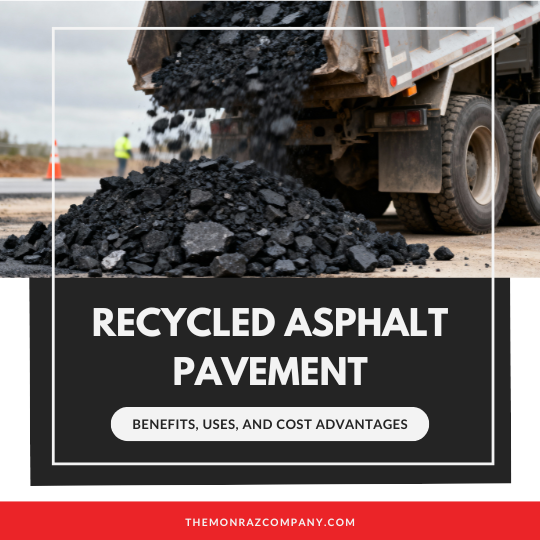
Recycled asphalt pavement or reclaimed asphalt pavement (RAP) is a material that professionals remove, mill, and process from existing asphalt surfaces. It often comes from demolished asphalt roadways, parking lots, and driveways.
Instead of discarding the old asphalt, contractors in the asphalt industry crush, screen, and blend the material into new, portable aggregate. The specifications and best practices for RAP processing, mix design, and application come from the
National Asphalt Pavement Association (NAPA).
If you’re curious about standard asphalt production, read our post titled: “How is Asphalt Made?”
How to Use Recycled Asphalt for Pavement: Acceptable Uses
- Parking Lots: Suitable for small commercial or residential lots, especially when compacted and sealed
- Private Roads: Performs well on low- to moderate-traffic private roads and community access lanes
- Farm, Ranch, and Utility Roads: Great for rural roads, maintenance paths, and equipment access routes
- Parking Pads: Provides an affordable, durable surface for RVs, trailers, and equipment storage
- Construction Site Access Roads: Durable enough for temporary or semi-permanent heavy equipment traffic
- Shoulders and Roadway Edges: Helps stabilize shoulders and reduce erosion along paved roads
- Erosion Control Areas: Helps stabilize slopes, ditches, and drainage channels when used strategically
- Base Material for New Asphalt: Can be used as a strong, stable base layer beneath new hot-mix asphalt
- Patchwork and Repairs: Useful for filling potholes, low areas, and irregular surfaces
What Does Recycled Asphalt Look Like on Pavement?
Once completed, a fresh recycled asphalt pavement surface looks like dark, compacted gravel. (Though dark, RAP usually looks slightly lighter than standard hot-mix asphalt.) Over time, it becomes smoother and more cohesive, resembling standard asphalt materials. To achieve a flat, uniform finish from the start, property owners can ask contracts to apply a light sealcoat.
Learn more about how to protect your pavement in our post, “What Is Sealcoating?”
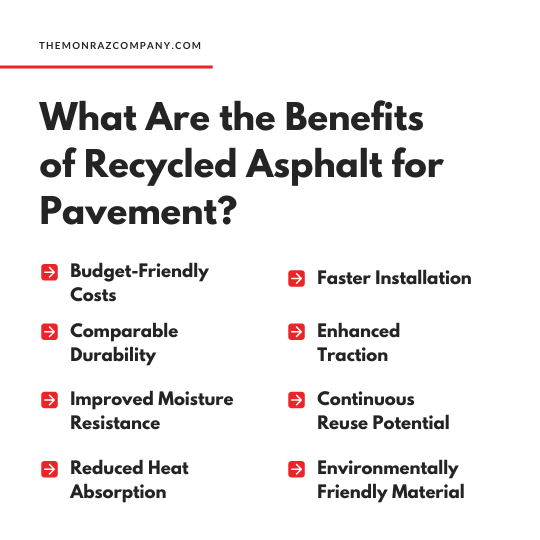
What Are the Benefits of Recycled Asphalt for Pavement?
Budget-Friendly Costs
RAP is one of the most cost-effective asphalt paving options. Since it utilizes reclaimed asphalt, contractors don’t need to purchase or produce new aggregate or binders to complete the project. This significantly reduces the cost of both materials and hauling expenses, making it a budget-friendly alternative for commercial and industrial property owners.
Comparable Durability
Though RAP uses reclaimed materials, once processed and compacted, it offers structural performance comparable to standard asphalt. This is because the binders in RAP material reactivate under compaction. Property owners will appreciate a high-quality, durable final surface suitable for low- to moderate-traffic applications.
Improved Moisture Resistance
Asphalt naturally becomes stiffer with age, increasing its resistance to moisture penetration. Since RAP already contains aged asphalt binder, it offers this benefit immediately. Unlike fresh material that needs time to develop that level of stability, RAP provides enhanced moisture resistance from the start.
Reduced Heat Absorption
Asphalt typically has a dark, heat-absorbing surface. RAP, however, tends to be slightly lighter in color with a more textured finish than new hot-mix asphalt. This combination allows it to absorb less heat, making it less prone to heat-related softening during high temperatures.
Faster Installation
Traditional hot-mix asphalt requires heating, transport, and on-site mixing, which adds significant time to the installation process. RAP eliminates this step because it does not require day-of heating or mixing. Because of this, RAP pavement projects allow for quicker completion, facilitating faster turnaround times.
Enhanced Traction
Without a sealcoat, RAP maintains a higher surface texture than smooth, freshly paved asphalt. More specifically, its naturally pebbled finish provides better initial traction. This is especially beneficial for slopes, utility roads, parking pads, and other applications where grip is essential.
Continuous Reuse Potential
RAP can be reclaimed and reused multiple times through modern pavement recycling methods. Because the material holds its structural integrity, it performs well in repeated recycling processes, including cold recycling. This ability to cycle through multiple reuse stages gives RAP near-infinite recyclability, making it one of the most sustainable pavement materials available.
For a similar breakdown, review our guide: “Cold Patch Asphalt.”
Environmentally Friendly Material
RAP is one of the most recycled materials in the United States. More specifically, millions of tons are reclaimed and reused each year through asphalt recycling programs. Every ton of RAP incorporated into new pavement reduces the need for virgin aggregate and asphalt binder. This saves energy and reduces fuel consumption at hot-mix asphalt plants.
The process of reclaiming and installing RAP also significantly cuts greenhouse gas emissions and minimizes landfill waste. Moreover, the repeated reuse of RAP results in a substantially lower long-term environmental impact than virgin asphalt or most other paving materials.
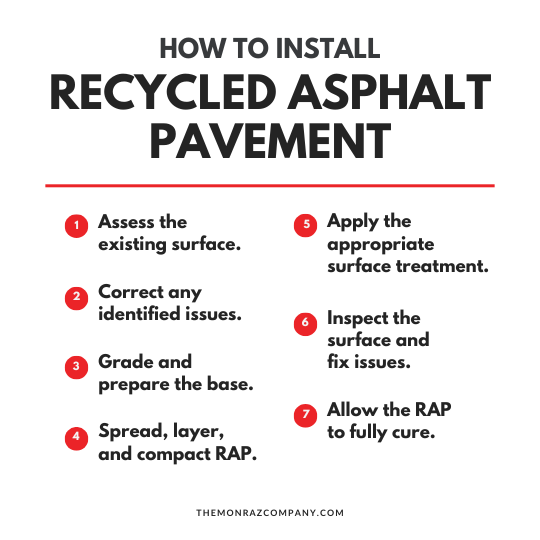
How to Install Recycled Asphalt Pavement
Step One: Assess the existing surface.
Before beginning, evaluate the condition of the existing surface—whether it’s a grassy area, gravel, or old pavement. Identify any problem areas such as soft spots, potholes, unstable soil, or drainage concerns. Additionally, determine whether vegetation or debris needs to be removed. Lastly, confirm that the subgrade is strong enough to support the new pavement layer.
Step Two: Correct any identified issues.
Once you have cataloged each concern, take time to correct any issues before moving forward. This may include improving drainage, replacing weak soil sections, filling potholes, or reshaping the site to ensure proper water flow. Addressing these early ensures a stable, well-prepared foundation for the remaining installation steps.
Step Three: Grade and prepare the base.
Next, shape the area to the required elevations and slopes so water drains properly and the final pavement surface remains uniform. After grading, remove all organic material such as grass, roots, and topsoil. These materials break down over time and compromise the stability of the pavement structure.
If the exposed soil cannot provide adequate support, you must create a new subbase. Do this by placing a layer of crushed aggregate over the prepared subgrade and compacting it thoroughly. A well-compacted aggregate base increases load-bearing capacity and reduces the risk of future settlement.
Step Four: Spread, layer, and compact RAP.
You should now apply RAP in multiple shallow layers until you reach the required full depth. Use a grader, skid-steer, or front-end loader to pull and spread the RAP evenly across the surface. For best results, each lift should be no more than 2–4 inches thick to ensure proper compaction and binder activation.
Before compacting, make sure each layer has uniform thickness, is free of clumps, and matches the planned grade and slope. Then compact the material using a vibratory roller, making several passes until the layer is dense and stable. Compaction is essential—this is what reactivates the remaining asphalt binders in the reclaimed material and allows the pavement to lock together.
Once the first lift has been spread, shaped, and compacted, repeat the process for the next layer. For commercial and industrial applications, the total RAP thickness typically ranges from 6–10 inches, depending on expected traffic loads. Always refer to the engineering plans to confirm the required pavement depth.
Step Five: Apply the appropriate surface treatment.
A surface treatment will enhance the durability of your paved surface. It will also ensure the material looks cohesive and holds minimal dust. There are a few types to choose from depending on your goals. Here are the available options:
- Light Asphalt Emulsion is a spray-applied binding agent that helps lock in surface particles, reduce dust, and improve moisture resistance.
- Sealcoat is a thin protective coating applied to the top of the RAP surface. Sealcoating darkens the pavement, improves weather resistance, and provides a more finished appearance.
- Chip Seal is a blend of asphalt emulsion and aggregate that creates a stronger, more textured finish.
- Thin Hot-Mix Asphalt Overlay is a thin layer of hot-mix material that’s added over the RAP base. It’s often used for higher-traffic commercial or industrial sites as it creates a smoother, more durable surface capable of supporting heavier loads.
Step Six: Inspect the surface and fix issues.
After installing the final lift and applying your surface treatment, carefully inspect the entire pavement surface. Look for low spots, loose areas, uneven sections, or edges that may need shaping.
Then, address any deficiencies by adding additional RAP material, correcting grading, or re-compacting. This final quality control check ensures the pavement is uniform, stable, and ready for curing.
Step Seven: Allow the RAP to fully cure.
Once you’ve confirmed the surface is faultless, allow the RAP time to cure. During this period, sunlight helps the remaining asphalt binders continue to harden and bond. Given this, avoid heavy traffic for at least 48–72 hours.
Additionally, monitor the surface for any early settling or moisture issues that could interfere with curing. If problems arise, ensure you fix them immediately. With the right conditions and support, the pavement will continue to strengthen over the following days. The result is a more durable, long-lasting final surface.
RAP is a cost-effective, environmentally friendly, and durable solution for your paving needs.
Despite the common stigma surrounding reclaimed construction materials, recycled asphalt pavement (RAP) is a proven, high-performing solution. Using RAP for your pavement project isn’t a compromise.
It’s a respectable option that offers the same structural strength as other paving options while delivering long-term value and substantial environmental benefits. In summary, recycled asphalt pavement is an excellent material for a wide range of commercial and industrial applications.
If you have more questions or are ready to start your recycled asphalt pavement project,
call the experts at
TMC Engineering. Our experience and commitment to superior surface performance allow us to deliver durable, long-lasting results you can trust.