Cement Treatment of Soil

June 9, 2025

Cement Treatment of Soil – Southern California (Including San Diego County)

Cement Treatment of Soil

📌 Purpose of Cement Treatment

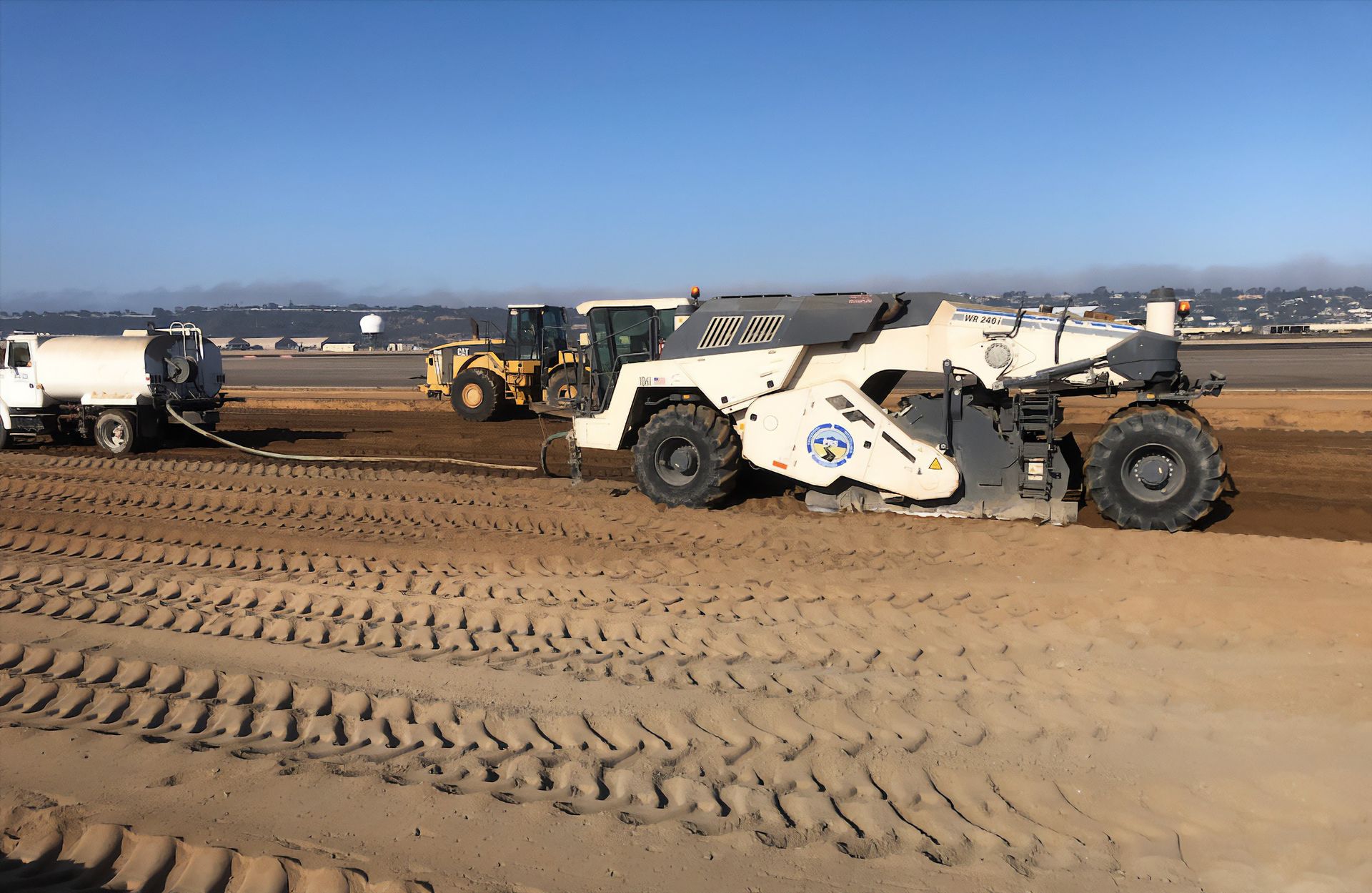
Cement treatment (also called soil-cement stabilization) is used to improve weak or moisture-sensitive soils by mixing them with Portland cement. This stabilizes the soil by increasing its strength, reducing expansion, and improving long-term durability—making it suitable for construction projects like roads, pads, and parking areas.


🌍 Application in Southern California (Including San Diego County)


Many areas in Southern California, including San Diego County, contain clayey or expansive soils with low bearing capacity and poor performance under wet conditions. Cement treatment is particularly effective in these zones because it:

  • Increases strength of native soils without importing material
  • Reduces shrink-swell potential, common in inland valleys and coastal mesas
  • Allows faster construction, especially in wet seasons

In San Diego County, cities like San Marcos, Escondido, Poway, and El Cajon frequently have older alluvial and clay-rich soils that are excellent candidates for this treatment.


🧱 Best Soil Types for Cement Treatment


Ideal soils include:

  • CL (lean clay) and CH (fat clay) under the Unified Soil Classification System
  • Moderate to highly plastic clays with moisture sensitivity

Poor candidates include:

  • Soils with high organic content
  • Very sandy or gravelly soils with minimal clay
  • Soils with high sulfate levels


🧪 Testing Required Before Cement Treatment

To confirm that cement treatment is suitable, engineers perform a set of tests:

Test Purpose
Atterberg Limits Classify soil and determine plasticity
Soil Classification (ASTM D2487) Identify soil type (CL, CH, etc.)
Proctor Test Determine optimal moisture and compaction
Unconfined Compressive Strength (UCS) Confirm cement-treated strength (target: 120–200 psi)
pH Testing Ensure pH ≥ 12 for cement reaction
Sulfate Content Test Ensure levels are safe for cement interaction
Gradation Analysis Understand soil composition

📘 Local Standards


Cement treatment must meet guidelines set by:

  • Greenbook (Standard Specifications for Public Works Construction)
  • Caltrans Section 24: Soil Stabilization
  • San Diego County Public Road Standards


Specifications typically include:

  • 3–7% cement content by weight
  • 12–18 inches of treatment depth
  • Minimum UCS of 120–200 psi at 7-day cure


🏗️ Why Choose TMC Engineering (San Marcos, CA)


TMC Engineering, based in San Marcos, California, is a trusted expert in cement-treated soil applications across San Diego and the broader Southern California region.


✔ What Sets TMC Engineering Apart:

  • Decades of experience: With many years in operation, TMC has completed thousands of square feet of successful cement-treated projects.
  • Local expertise: Familiar with the diverse soil typesacross San Diego County—from inland valley clays to coastal silt and fill.
  • Integrated service: TMC partners closely with Local Soil Engineering firms to analyze soil conditions and design the best stabilization solution—from field sampling to final grading.
  • Construction-ready delivery: TMC manages the process from initial testing to treatment and compaction, ensuring the site is fully prepared for paving, structures, or heavy use.


Whether you're building a roadway, preparing a building pad, or stabilizing slopes, TMC Engineering delivers proven, cost-effective soil improvement tailored to the unique needs of Southern California terrain.


✅ Summary

Topic Detail
Treatment Purpose Improve soil strength, reduce swell, stabilize base
Best Soil Types CL/CH clays with moderate to high plasticity
Ideal Regions Inland and coastal San Diego (San Marcos, Escondido, El Cajon)
Key Testing Atterberg Limits, UCS, Sulfates, pH, Proctor
Qualified Provider TMC Engineering, with years of experience and partnerships with local soil labs
Contractor installing anchor bolts into concrete foundation
December 1, 2025
Concrete is one of the most effective base materials for any structure. However, it’s particularly helpful for commercial and industrial properties. Concrete provides exceptional strength, unmatched durability, and essential long-term stability. It’s also resistant to moisture, fire, pests, rot, temperature fluctuations, and even seismic forces common in Southern California. Though concrete is the ideal choice for foundations, getting the most structurally sound final product takes expert execution. One component contractors will need to use accurately is anchors or anchor bolts. To ensure each project is both structurally sound and compliant with industry standards, it’s important to understand what anchor bolts do and how they’re properly installed. Therefore, in this post, we will break down both—explaining their purpose and methods contractors rely on for accurate installation. If you want professional results backed by years of construction expertise, TMC Engineering can help. Our team specializes in concrete foundation work, structural anchorage, and seismic-ready building solutions.We ensure every project is completed safely, precisely, and in full compliance with local codes. Reachoutto us for expert support on your next commercial or industrial foundation project.
What Are Foundation Walls? Key Construction Insights
November 24, 2025
Today’s post serves as a comprehensive guide to foundation walls. We will discuss what they are, their purpose, and the best practices for construction and maintenance
What Is Hydraulic Cement?
November 17, 2025
In this post, we’ll focus on a specialized type of concrete called hydraulic cement. Know the different types, its uses, and how to use hydraulic cement.