What Causes Potholes In The Road?
Roads are typically constructed using materials like asphalt, concrete, and gravel to create durable surfaces that can withstand the wear and tear of traffic. However, it’s not uncommon for potholes to eventually form over time as these materials are exposed to various elements.
Understanding the underlying causes of pothole formation is a key step in pothole prevention. So, today we’re taking a look at a roundup of common causes of potholes in the road.
If you’d like a quicker or more specific answer to your pothole repair questions, call the experts at TMC Engineering ! If you’re in Southern California, we can help educate you on your problem and perform whatever repair is necessary. We’ve got an expert solution for your concrete or asphalt concern!
What Causes Potholes In The Road?
This post will discuss the most common reasons we see potholes developing. By understanding what typically causes these road hazards, you will know what to look out for and how to potentially minimize future potholes from forming. After all, potholes can be dangerous and cause serious damage to vehicles!
Today, we’ll discuss what exactly a pothole is, examine the leading contributors to their creation, touch on who is responsible for road repairs, and provide some tips on fixing potholes that have already surfaced.
Let’s get started :
What Is A Pothole?
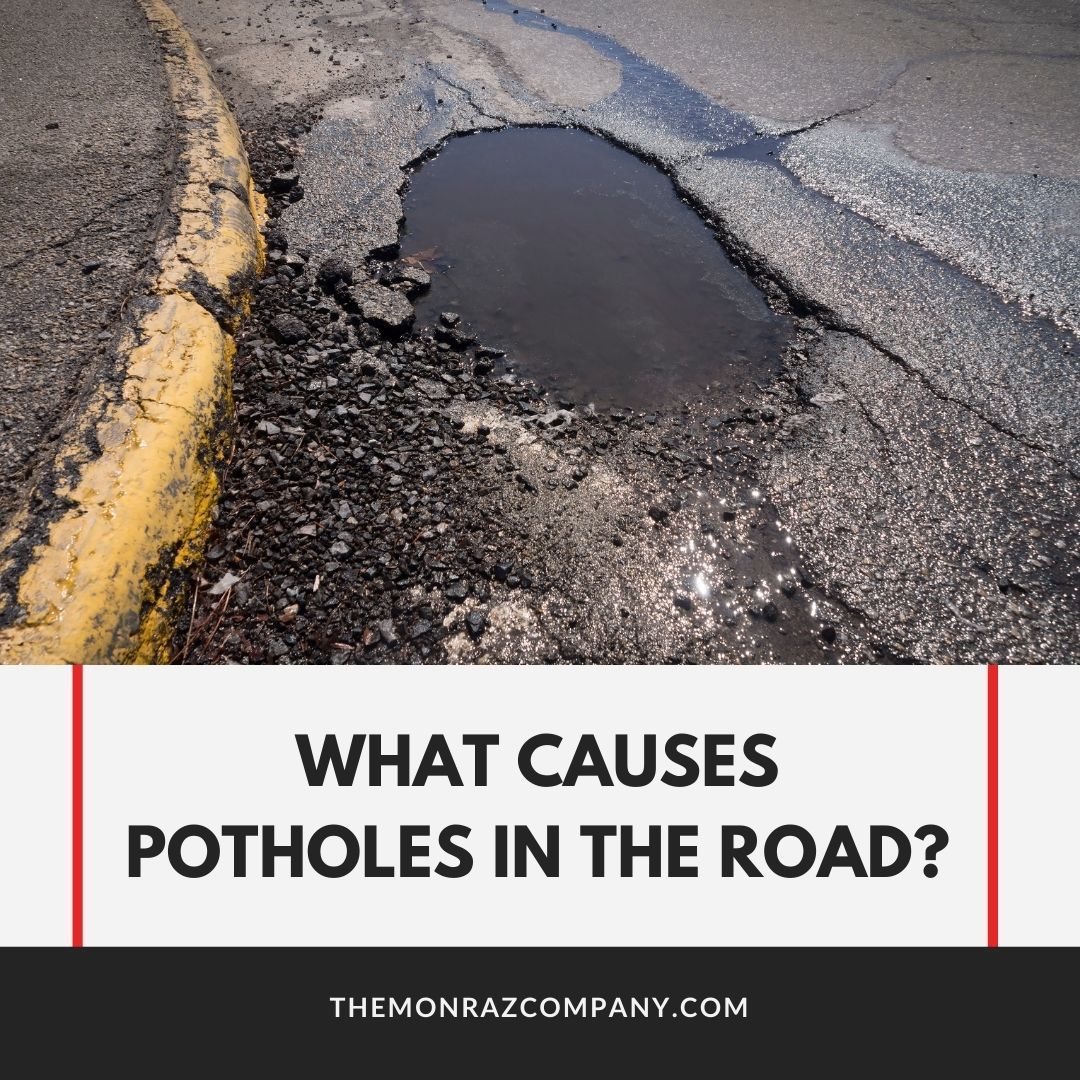
A pothole is essentially a hole or cavity that develops in the road surface. They typically form in the uppermost layer of asphalt or concrete that makes up the road. Potholes can range in size but are usually several inches to over a foot in width. If you’ve driven before, you’ve likely seen potholes (and probably felt them). They’re obvious areas of the road where the pavement is cracked or missing.
If left unrepaired, potholes only expand in size over time as the damaged area continues deteriorating. Large potholes can be a problem for drivers as they can cause tire blowouts, bent rims, or compromised vehicle alignments depending on the size of the hole and the vehicle’s speed. Additionally, potholes can cause a vehicle to unexpectedly veer, resulting in potential accidents. For more on this, go through our post on why it is important to look out for potholes .
This makes filling potholes an important part of road maintenance to help preserve the usability and safety of driving surfaces. Understanding what contributes to their formation can help address the root causes more effectively.
What Creates Potholes In The Road?
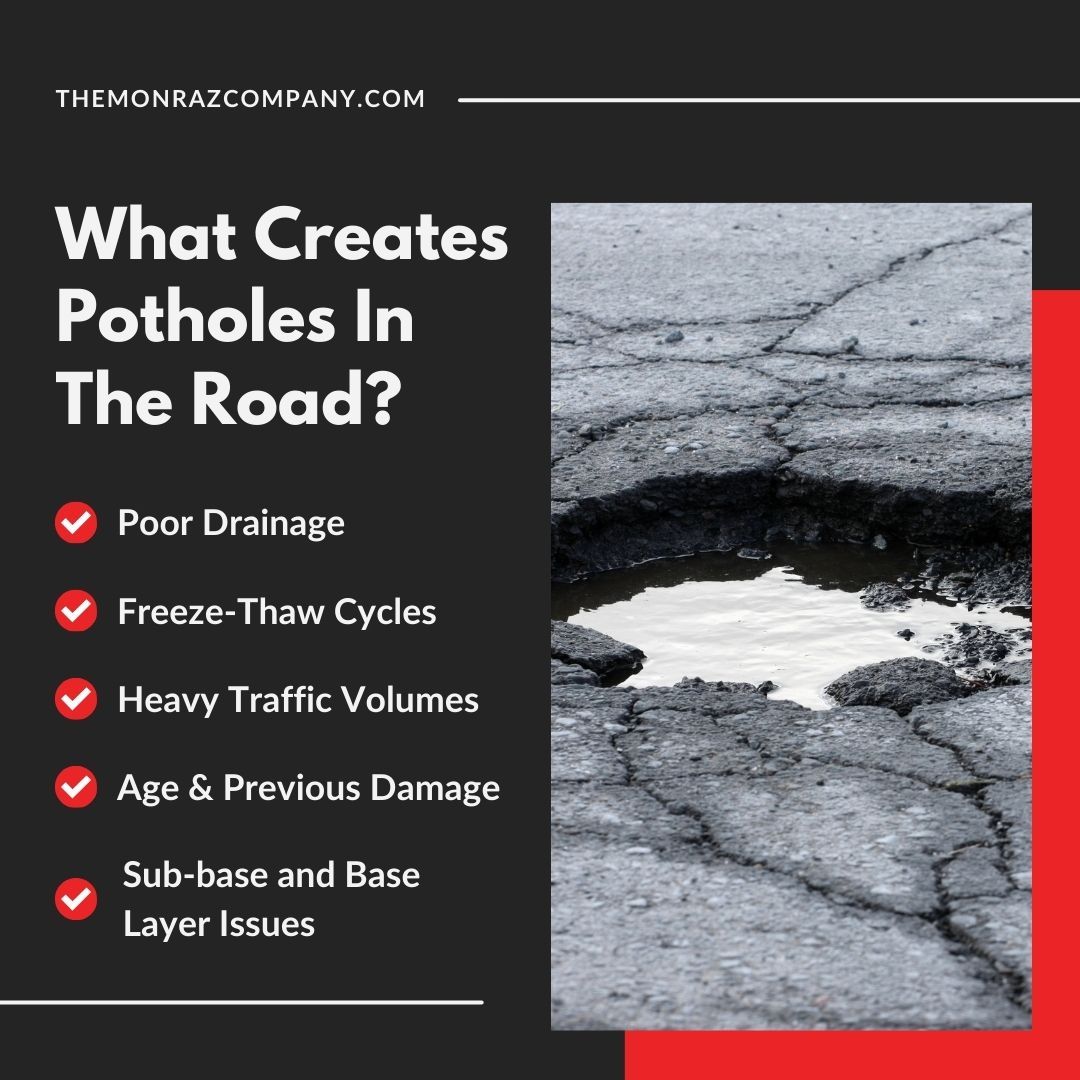
Poor Drainage
When water isn’t properly draining away from the road, it can seep into the base layers and cause damage. The freeze-thaw cycles that occur during winter or spring weather can worsen this issue, gradually weakening pavement over time.
Freeze-Thaw Cycles
Freezing temperatures place stress on roads that ultimately emerge as cracking in the asphalt surface. Water seeps in through these cracks when a liquid, but then freezes and expands as the temperature drops. Then, it melts and the cycle repeats leading to pothole formation. Roads located in colder climates are more susceptible for this reason.
Heavy Traffic Volumes
The more vehicles that regularly pass over an area of road, the more wear and tear it sees. This repetitive loading weakens pavement and accelerates deterioration, setting the stage for potholes.
Age & Previous Damage
Just like with anything, roads have natural lifespans before needing repairs or replacement. Weaknesses and cracks are more likely to form on older roads and in areas where there have been previous utility cuts or trenches.
Sub-Base and Base Layer Issues
The layers underneath the asphalt surface, known as the sub-base and base layers, provide structural support and stability to the pavement above. If the foundation soil and sub-base layers are not adequately stable and consolidated, it undermines the pavement sitting atop. Over time, this can lead to cracking and settling of the asphalt surface as the soils and lower layers gradually shift.
Who Is Responsible For Potholes In The Road?
Who is responsible for repairing potholes typically depends on the location of the roadway. State departments of transportation oversee maintenance on major highways and interstate systems that cross multiple counties and municipalities. They receive funding allocated specifically for managing repairs across entire state-level road networks.
When it comes to municipal roads within city and county boundaries, the responsibility usually falls to local governments. Towns, villages, and parishes repair potholes forming on streets and roads within their jurisdiction. They utilize the budget from local taxes and fees to plan projects addressing deteriorating road conditions.
In some cases, private entities are tasked with pothole patching. Residential communities like homeowners associations would fix roads solely within their neighborhoods that are not publicly-owned. Reservations may also care for routes spanning tribal lands.
In summary, the responsibility for road maintenance depends on the governing body overseeing each section. Their ability to carry out repairs relies on adequate maintenance budgets. Effective communication between different jurisdictions is essential to ensure smooth travel surfaces.
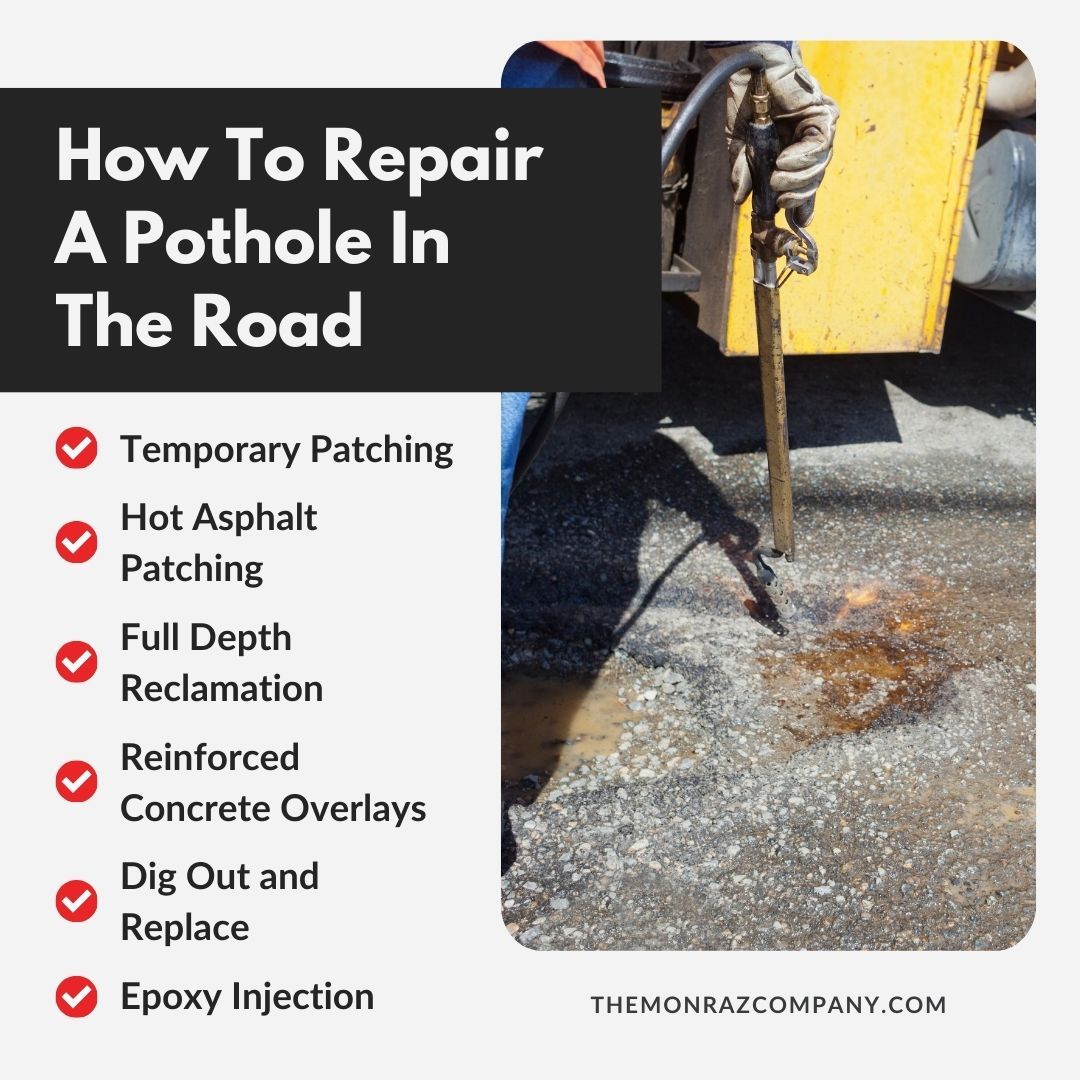
How To Repair A Pothole In The Road
Temporary Patching
Using a cold patch asphalt mixture sold in bags is a quick-fix option for small potholes. The cold patch fills the hole to get the road drivable again until a permanent repair can be scheduled. It’s a basic solution but only intended to last a few weeks tops before deteriorating.
Hot Asphalt Patching
For larger holes, applying hot asphalt that is then shaped and compacted provides a stronger, longer-lasting repair that mimics how asphalt roads are constructed. Proper tools and compaction are needed to fully integrate the new material with the existing road surface.
Full Depth Reclamation
Deeper repairs may involve removing and replacing pavement layers through full-depth reclamation using specialized equipment. This process pulverizes the existing material along with some base layers, reshaping them to form a renewed structural base before repaving.
Reinforced Concrete Overlays
Overlaying a section of road with new concrete or asphalt reinforces areas weakened by cracks or potholes. Reinforcing meshes can also be incorporated into the new overlay for added strength.
Dig Out and Replace
For severe damage, the pothole area may need to be excavated down to the road base. The hole is then filled in layers with compacted gravel/crushed stone and new asphalt matching the preexisting depth and cross-section.
Epoxy Injection
Small cracks can be sealed with epoxy injected under pressure to prevent water infiltration. Though limited to minor cracking and not full depressions like potholes.
Proper tools, filling/compacting each layer, and ensuring good adhesion to surrounding pavement are key factors to consider for long-lasting pothole repairs using any of these restoration techniques. For larger or deeper potholes, contact professional contractors to ensure they are properly corrected with the best equipment and expertise. TMC Engineering is your best bet to get the job done right!
You can also read our post on how to patch holes in concrete for more on repairs on road surfaces.
Tips on How to Prevent Potholes
While patchwork addresses visible problems, real solutions come from improving drainage, using robust base layers underneath asphalt surfaces able to withstand water seeping into the pavement, and practicing regular maintenance to repair cracks or sections before they deteriorate into large voids. Properly compacting and filling in thin layers is also key to success. With the right knowledge and techniques, repairing potholes helps preserve our roadways for years to come.
Understanding the causes of potholes helps identify preventative measures we can implement through road design, drainage features, and scheduled maintenance programs. These programs replenish aging road surfaces before they break down. Minimizing factors like moisture intrusion and repeated freeze-thaw cycles can significantly reduce future pothole formation. While potholes cannot be completely avoided, we can mitigate their impact on our transportation by addressing root problems and committing to sensible road construction practices and budgets that support timely repairs.
Potholes are formed because of a variety of problems that can easily be prevented and corrected when necessary.
In summary, common causes of potholes include moisture intrusion, temperature fluctuations, heavy loads, and the natural deterioration of roads over time. Understanding these factors is crucial in combating this persistent issue. By implementing adequate drainage, strategically placing overlays, filling cracks, and rehabilitating foundation layers, along with a focus on prevention rather than reaction, communities can significantly reduce the number of potholes. This approach, supported by sufficient road maintenance budgets, can help keep our streets in better condition year after year.
You can also read our guide on parking lot pothole repair for commercial properties.
For more information on other concrete issues, you can visit our blog . You’ll find guides on various concrete problems and solutions including, why does concrete crack , how to fix potholes in gravel driveways , how to repair a concrete parking lot , and so on .
Here at TMC Engineering , we have a deep commitment to delivering projects characterized by the highest standards for safety , workmanship, and client satisfaction. We aim to provide you with valuable content and insights related to the services our team of experts provides! Whether you require asphalt paving , striping, sealing , or concrete work , we offer a full suite of transportation construction solutions. Look no further we’ve got all you need and more!