Slab Foundation Repair: Understanding Your Repair Options
Concrete slab foundations are the base for many residential and commercial buildings because they are cost effective and simple. While slabs are stable when installed properly, over time, some degree of deterioration will occur from environmental exposure and other stresses. Minor cracks may not be a problem, but extensive settling can be a big problem if left unattended.
Repairing slab foundations requires evaluating each situation individually. Small surface defects can be patched or sealed. But more serious stability issues from shifting soil or water intrusion will require reinforced support systems injected underneath the slab. The best repair approach depends on a qualified assessment of the feasibility, cost, and lifespan of each repair method.
In this post we’ll go over the slab foundation repair options. Knowing the pros and cons of each will help you choose long-term solutions not quick fixes. From lifting sunken areas to waterproofing, slab foundation repair keeps buildings safe and stable for years to come.
Are you in Southern California and you need your slab foundation repairs done effectively and efficiently? Then call the experts at TMC Engineering ! We’d love to help you with your parking lot paint removal, or any other concrete or asphalt project!
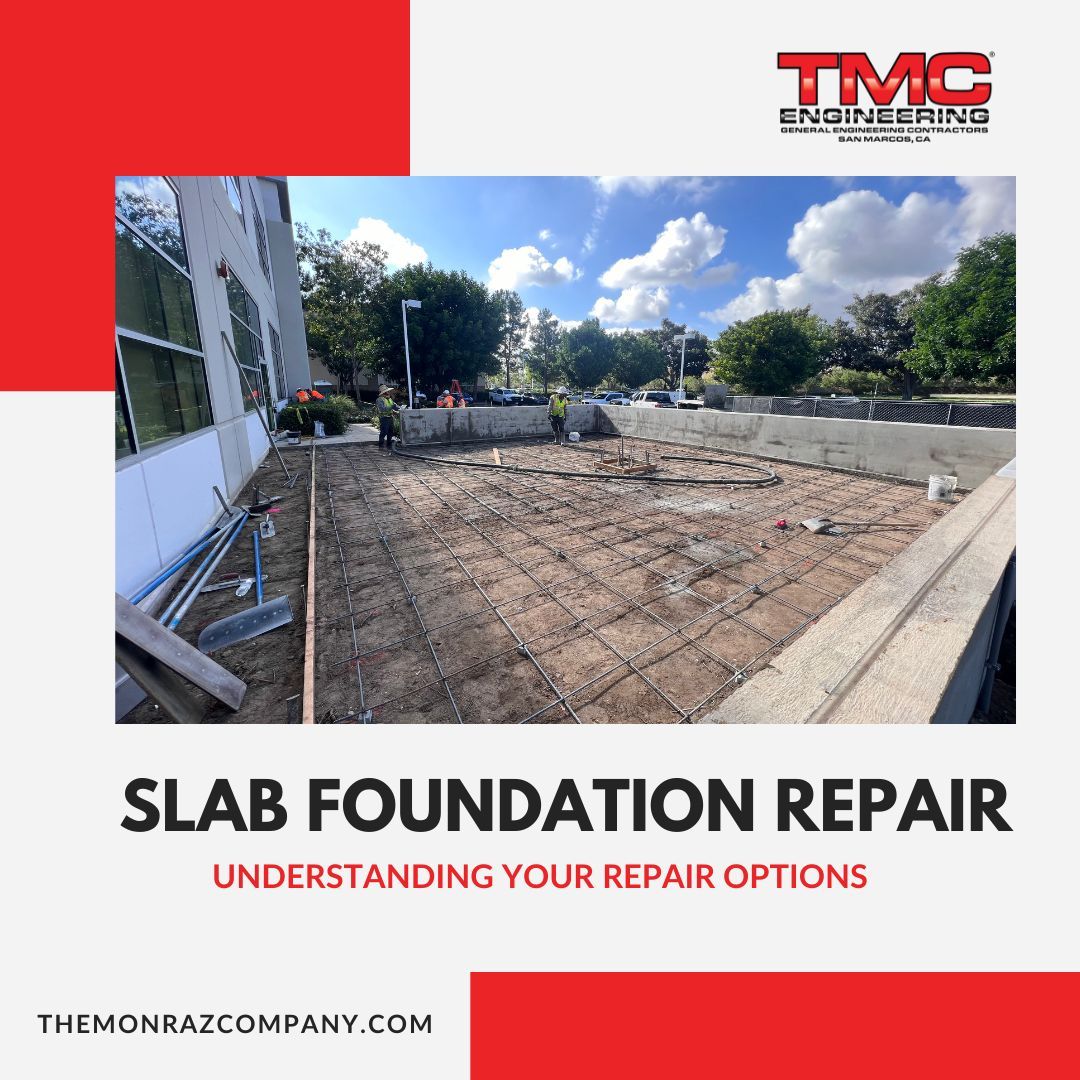
Slab Foundation Repair
A concrete slab foundation is simply a concrete floor poured directly on compacted soil or a layer of gravel. While simple in design, slab foundations can have issues like any other type of foundation if not installed and maintained properly. Knowing the most common causes of damage will help you choose the right repair method.
Causes of Slab Foundation Damage
Potential causes of slab foundation damage include:
- Tree roots growing under or near the foundation can push up the slab overtime. This could cause foundational cracking or cause the whole slab to lift.
- Poor drainage can trap moisture under the foundation , which can cause cracking as the soil swells with moisture or freezes in winter.
- Settling soil over many years can cause a concrete slab to sag or sink in areas if not reinforced enough.
- Nearby construction or demolition that vibrates the soil can damage an existing slab foundation.
Fixing significant slab foundation issues often requires the expertise of a foundation repair expert to assess the problem and choose the appropriate method of foundation repair. Complex repairs will always require the expertise of professionals and there’s no team better to get this done if you’re in Southern California than TMC Engineering .
How To Repair Slab Foundation
Property owners with damaged slab foundations have several repair options. Foundations are a big investment, so research the repair methods to choose the best and most cost effective solution for your specific issue. There is no one-size-fits all solution, but a foundation professional can objectively look at each job and recommend the best approach.
The repair depends on several key factors. Knowing the concrete slab’s specific problems (is it isolated sinking or widespread settling) determines the complexity and scope of the repair. You’ll also want to consider foundation repair cost, environmental risk, and whether the repair is a long-term solution.
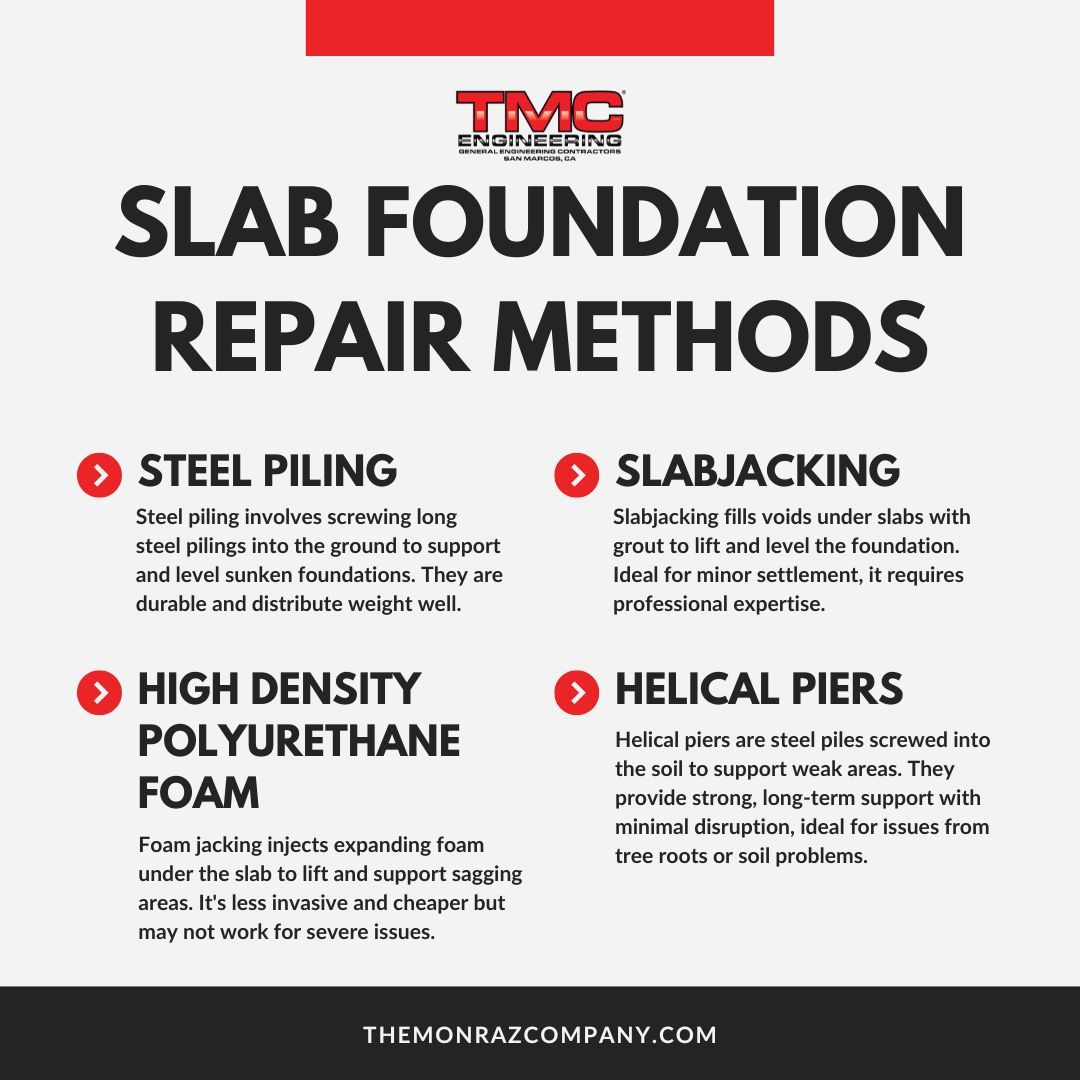
Slab Foundation Repair Methods
Steel Piling
One way to fix cracked or sinking foundations is steel piling. Also known as steel piers, these long pilings are screwed into the ground to support the foundation. Steel piling is good for lifting and leveling homes with sunken spots or extensive damage. The pilings are durable and distribute weight well.
High Density Polyurethane Foam
For some slab foundation issues, high density polyurethane foam injection can fix problems without major repairs. By injecting the expanding foam under holes drilled in the slab, it lifts and supports sagging areas as it expands and cures. This “foam jacking” method is less invasive and often cheaper than other methods. But, it may not work for severe slab settlement.
Slabjacking
Also known as concrete jacking, slabjacking involves drilling into voids beneath concrete slabs and pumping a grout mixture to fill the holes. As it sets, the grout holds the home’s weight and lifts the slab back into level. Slabjacking can fix minor settlement but requires professional expertise to inject the mixture correctly. It’s best for isolated soft spots, not extensive damage.
Helical Piers
For more serious foundation issues, helical piers provide strong support. These screw-like piles are turned directly into the soil to support weak areas. Made of steel, they are very strong but can be installed without disrupting large areas like traditional poured piers. Helical piers allow you to lift a slab and keep it level long term. They work well where tree roots or soil issues are the problem.
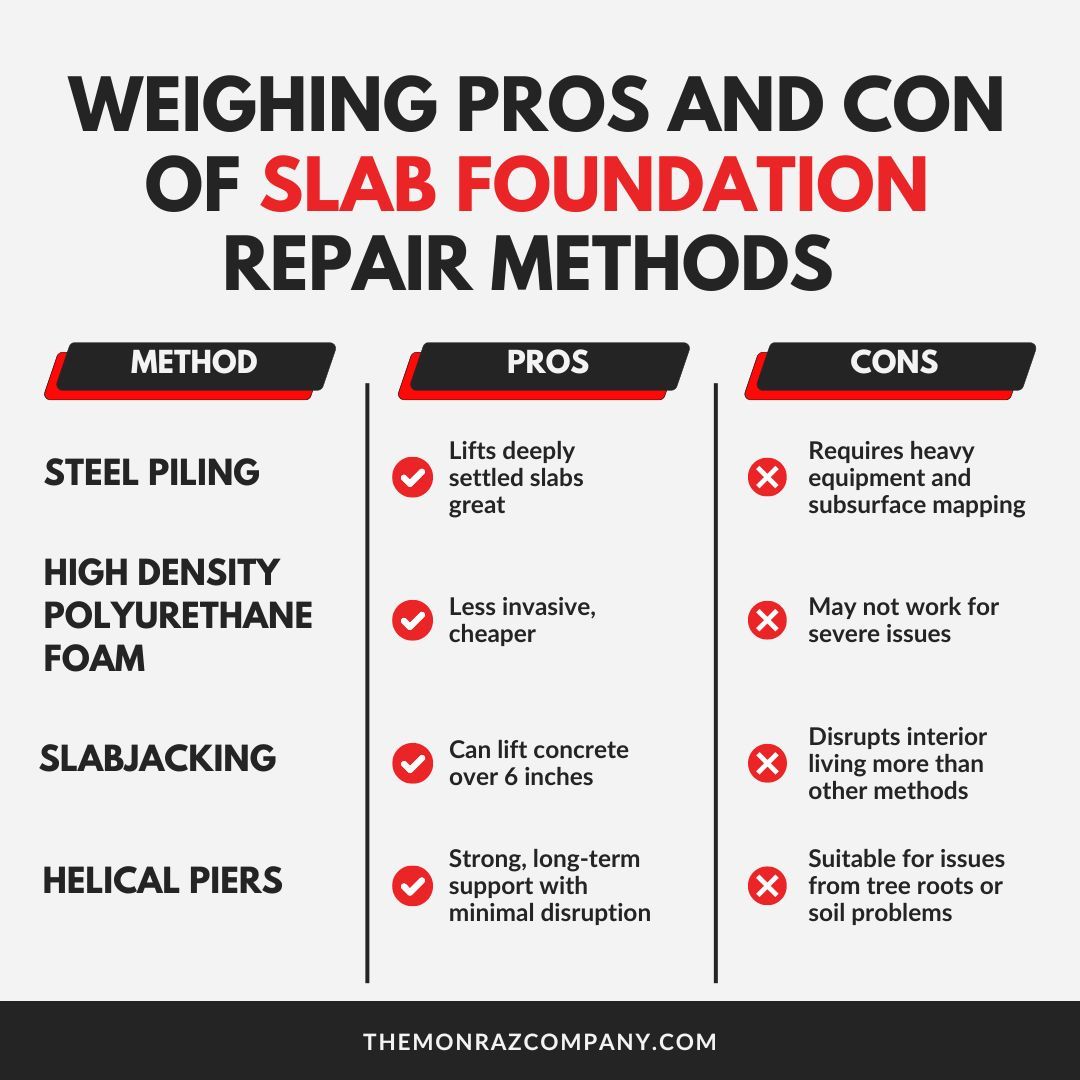
Weighing Pros and Con of Slab Foundation Repair Methods
No method is best in all situations , so comparing the pros and cons helps with the decision. For example, while steel piling can lift deeply settled slabs well, it requires heavy equipment to maneuver and subsurface mapping from engineering scans. Slabjacking’s self-leveling grouts can lift concrete over 6 inches but disrupts interior living more than less invasive methods. Considering those tradeoffs with your personal priorities and budget will lead to informed decisions for each job. With project scopes so varied, foundation experts provide objective recommendations for long – term stability.
The most permanent repairs involve addressing root stability issues to prevent future problems. Re-establishing proper drainage also protects your investment, whether by directing water away with graded soil or installing diverter channels. Contractors include those preventative measures in the repair scope to get the most value out of the stabilization project for each foundation condition. Their goal is to restore the structure to its original use rather than patching temporarily to delay the inevitable settling without fixing the underlying issue.
Choose the slab foundation repair method that suits your problem, budget, and goals.
While it is important to address slab foundation problems promptly, the method of repair heavily depends on the type and extent of damage present. Foundation repair contractors can evaluate each job and select the most cost-effective technique suited to the specific foundation issues. Experienced professionals can apply the right repair method to restore faulty slab foundations to a sturdy, long-lasting state.
For more information on how to deal with other concrete issues like crumbling foundations, check out our guide on how to repair crumbling concrete foundations . Foundation repair companies offer honest evaluations and trusted solutions for all types of foundation issues.
Our team of experienced paving professionals at TMC Engineering provides a wide range of transportation construction services to meet all of your project needs. Whether you need asphalt paving , parking lot striping, sealing , or concrete work completed, we have the expertise and equipment to handle the job efficiently and cost-effectively. By combining extensive industry knowledge with high-quality materials and workmanship, we can deliver durable, long-lasting results!
Contact us today to discuss your requirements and receive a customized proposal. We aim to forge strong partnerships through collaboration on quality-focused solutions!