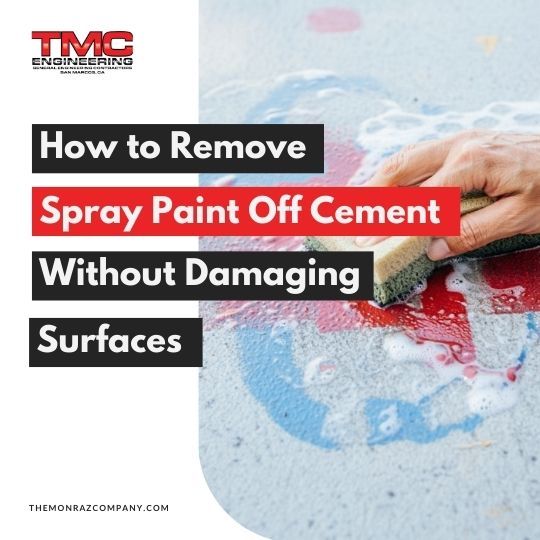
How to Remove Spray Paint Off Cement Without Damaging Surfaces
It’s not uncommon for spray paint to end up on cement surfaces and structures. This is largely because contractors often use spray paint during paving and construction to mark cut lines, utilities, layout points, or inspection notes.
When paint removal isn’t included in the project scope, cleanup is often delayed or overlooked. Combined with weather exposure or absorption into unsealed concrete, these markings can remain long after the work is complete. However, not all spray paint on concrete is left with practical intent.
Commercial and industrial properties with low traffic are common targets for vandalism. For property owners, removing graffiti is often a top priority, as lingering paint can detract from a building’s professional appearance and overall curb appeal. In this guide, we’ll share how to remove spray paint from cement effectively.
If your property is in Southern California and you’re struggling with spray paint removal,
contact the experts at TMC Engineering. We offer services that address spray paint removal at every stage, from evaluation to final cleanup. Our experience and high standards for quality ensure the paint is removed safely—without damaging the existing concrete surface.
How to Remove Spray Paint Off Cement Without Damaging Surfaces
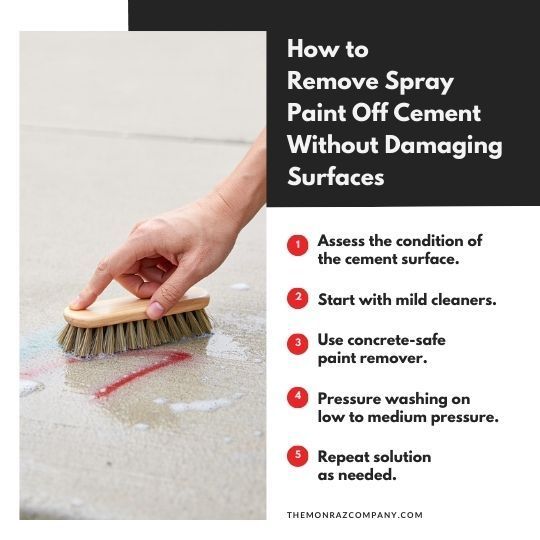
Step One: Assess the condition of the cement surface.
Before choosing a removal method, it’s important to understand how the condition of the cement will impact the process. Not all concrete reacts the same way to cleaning products or pressure.
- Sealed vs. unsealed concrete: Sealed concrete is less porous, meaning spray paint typically sits closer to the surface and is easier to remove using mild cleaners or light pressure washing. Unsealed concrete absorbs paint more readily, often requiring specialized graffiti removers and multiple applications.
- Surface texture: Smooth or finished concrete releases paint more easily. In comparison, rough, broom-finished, or exposed-aggregate surfaces trap paint deep within the pores and crevices. These textured surfaces usually need longer dwell times and more targeted cleaning methods.
- Age of the paint: Fresh spray paint is far easier to remove than paint that has cured or weathered. Older stains may chemically bond to the cement surface, requiring stronger removal solutions.
- Overall surface condition: Cracked, spalled, or deteriorated concrete is more vulnerable to damage during cleaning. Aggressive chemicals or high pressure can worsen existing flaws, so a gentler, controlled approach is essential.
Step Two: Start with mild cleaners.
Dilute a mild detergent, such as Dawn dish soap or a concrete-safe neutral cleaner, with warm water. Then apply the soapy water solution using a stiff nylon brush. Avoid wire brushes or highly abrasive tools, as these can permanently scar or etch the concrete surface.
Use the brush to scrub off the paint, starting with light pressure and increasing only as needed to prevent unnecessary damage. Soap and water may be sufficient for removing fresh spray paint from concrete that’s smoother or less porous. However, most stains, especially older ones, will require additional treatment.
Note: Do not use hot water to remove paint. This can soften the paint, smearing it and driving it deeper into the concrete.
Step Three: Use concrete-safe paint remover.
For more set-in spray paint on rough or porous surfaces, a concrete-safe paint remover is typically required. Manufacturers design these products to penetrate the paint and break the coating's bond with the concrete for safe removal.
Apply the remover according to the manufacturer’s instructions. Additionally, always apply a small amount on an inconspicuous area before performing large-scale application. Some harsh removers can etch, discolor, or weaken cement. Moreover, a patch test helps confirm the product is suited to your specific surface.
Step Four: Pressure washing on low to medium pressure.
If the stain persists, pressure washing can help lift loosened paint. To avoid damaging the surface, use low to medium pressure and maintain at least 12–18 inches of distance between the nozzle and the concrete. This helps prevent etching or surface erosion.
Rather than focusing on a single spot, make consistent, even passes across the area and repeat as needed. In some cases, water alone may be sufficient, depending on how effective earlier cleaning methods were. For more stubborn stains, you can use a mild concrete cleaner or diluted graffiti remover for additional cleaning power.
Step Five: Repeat the process as needed.
Deeply absorbed or older spray paint often requires multiple applications to fully remove. Between applications, use a clean cloth to remove excess residue so you can clearly assess progress before repeating the process.
As you continue the cleaning, allow each cleaner or remover the proper dwell time before rinsing. Furthermore, ensure you reassess the surface between each treatment. It’s wise to avoid over-scrubbing, excessive pressure, or unnecessary chemical application, which can damage the cement.
Step Six: Consider adding a concrete sealer.
Once you have fully removed the spray paint and the surface has dried, consider applying a concrete sealer. This can help protect the cement moving forward. Sealers reduce surface porosity, making it harder for future paint, stains, or contaminants to penetrate the concrete.
A properly applied sealer also simplifies future cleanups, as spray paint and other markings are more likely to sit on the surface rather than absorb into the cement. When selecting a sealer, choose one compatible with your concrete type and intended use. Additionally, follow the manufacturer’s instructions for application and curing time.
For more information,
contact us at TMC Engineering. Also, read our guide titled
”Sealer for Concrete: What are the Best SEals for Different Concrete Surfaces?”
What Protective Gear Do You Need for Removing Spray Paint?
- Gloves: Chemical-resistant gloves protect your skin from detergents, graffiti removers, and paint residue.
- Eye protection: Safety glasses or goggles help prevent splashes, debris, or pressure-washer runoff from contacting your eyes.
- Respiratory protection: When working with paint removers (particularly in enclosed or poorly ventilated areas), wear a respirator or mask rated for chemical fumes.
- Protective clothing: Long sleeves, pants, and closed-toe shoes help shield skin from splatter and high-pressure spray.
- Hearing protection: Pressure washers can be loud during extended use. Because of this, hearing protection may be helpful for longer jobs.
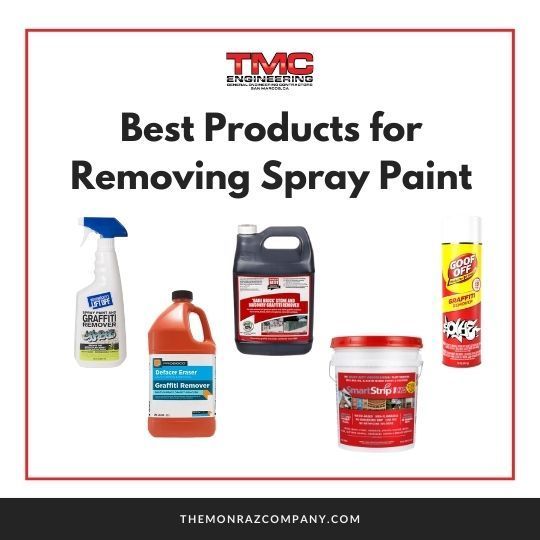
Best Products for Removing Spray Paint
PROSOCO Graffiti Remover
- Type: Professional-grade, concrete- and masonry-safe graffiti remover
- Best for: Commercial concrete, sidewalks, retaining walls, and parking structures
- Why it works: Designed to penetrate porous surfaces without etching or weakening cement
- How to use: Apply evenly, allow proper dwell time, then rinse or pressure-wash at low to medium pressure.
- Good to know: This is a popular, reliable product used often by contractors and facility maintenance teams.
Dumond Smart Strip Graffiti Remover
- Type: Thick, gel-based, low-odor paint remover
- Best for: Older, layered, or deeply absorbed spray paint
- Why it works: Clings to vertical and porous surfaces, allowing extended dwell time
- How to use: Apply a generous layer, cover if needed to prevent drying, then rinse and scrape gently to remove any excess paint.
- Good to know: It is ideal for situations where you need several applications and must prevent surface damage.
Motsenbocker’s Lift Off Graffiti Remover
- Type: Water-based, biodegradable graffiti remover
- Best for: Light to moderate spray paint on concrete, brick, and stone
- Why it works: Breaks down paint without harsh solvents or strong fumes.
- How to use: Spray directly on the paint, agitate lightly with a nylon brush, and rinse the area thoroughly.
- Good to know: A good option for smaller areas or residential use.
Goof Off Graffiti Remover (Professional Strength)
- Type: Solvent-based, high-strength graffiti remover
- Best for: Tough, stubborn paint on unsealed or heavily stained concrete
- Why it works: Cuts through cured and oil-based paint quickly when gentler methods fail
- How to use: Apply in small sections, allow the product time to work, agitate gently with a nylon brush, and rinse completely.
- Good to know: Always perform a patch test. This product is powerful and not suitable for all surfaces.
Bare Brick, Stone & Masonry Graffiti Remover
- Type: Specialty masonry-safe cleaner
- Best for: Decorative or architectural concrete, brick, and stone surfaces
- Why it works: Targets paint while preserving the natural appearance of masonry
- How to use: Apply evenly, allow dwell time, then rinse or pressure wash gently
- Good to know: One of the best remover solutions for preserving the natural appearance of concrete, masonry, or other surfaces.
Removing spray paint from cement requires patience, the right products, and a methodical approach.
By starting with gentle cleaning methods and adjusting your technique based on surface conditions, you can remove spray paint effectively without damaging the concrete. When stains are stubborn or the surface requires extra care, working with experienced professionals helps ensure the best long-term results and preserves the integrity of your concrete surfaces.
For more effective solutions for removing other types of paint from concrete surfaces, read these posts next: